
E-Commerce Website Cost Breakdown: From MVP to Enterprise Store
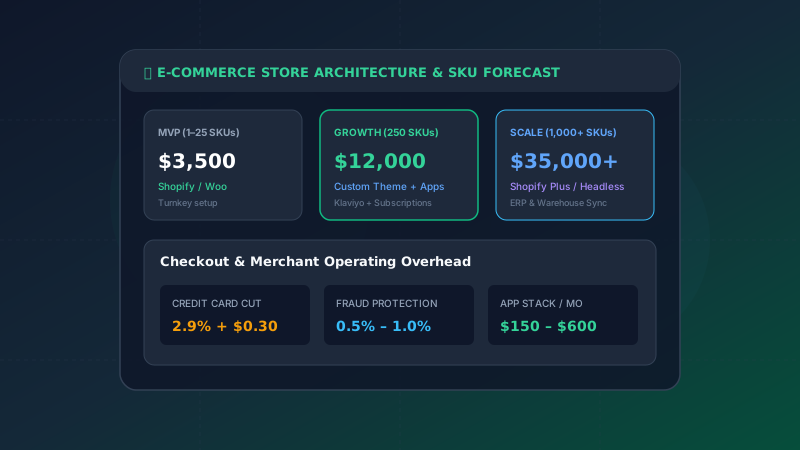
Launching a modern e-commerce storefront in 2026 requires balancing frontend conversion aesthetics with robust backend infrastructure. Unlike an informational website, an online store directly processes financial payments, calculates dynamic sales tax, synchronizes real-time warehouse inventory, and manages customer personal data under strict PCI-DSS Security Compliance.
An entry-level Shopify store can be set up for $2,500 to $5,000, while a high-volume multi-brand retailer or custom headless marketplace can easily require $35,000 to $120,000+.
Estimate your store's cost based on SKU count, payment integrations, and design fidelity in our Website Cost Calculator.
1. 2026 E-Commerce Cost Tiers by Business Stage
| Store Tier | SKU Range | Tech Platform | Upfront Build | Monthly SaaS / Apps |
|---|---|---|---|---|
| Startup MVP Store | 1 – 25 SKUs | Shopify Basic / WooCommerce | $2,000 – $5,000 | $50 – $150/mo |
| Growth DTC Brand | 25 – 250 SKUs | Shopify / WooCommerce Custom | $6,000 – $18,000 | $150 – $500/mo |
| Mid-Market Retailer | 250 – 2,500 SKUs | Shopify Plus / BigCommerce | $20,000 – $55,000 | $800 – $2,500/mo |
| Enterprise / Headless | 5,000+ SKUs | Next.js Commerce + Medusa/Shopify | $50,000 – $150,000+ | $2,000 – $8,000/mo |
2. Essential Line-Item Components of an E-Commerce Build
A. Product Catalog Architecture & Migration
Formatting product attributes (variants, sizes, colors, tax categories, SKU codes) and optimizing product images for high-DPI displays takes significant developer and data entry time. Migrating 500 existing products from an old store into a new database typically costs $800 – $2,500.
B. Payment Gateways, Multi-Currency & Tax Automations
Integrating Stripe, Apple Pay, Google Pay, PayPal, and "Buy Now Pay Later" (Klarna, Affirm) requires strict webhook verification and refund testing. Dynamic automated tax calculation engines like Avalara or TaxJar charge $50 – $300/month.
C. Custom Checkout Flow & Abandoned Cart Logic
Standard Shopify checkouts work out of the box. Customizing the checkout experience with 1-click post-purchase upsells, custom gift messaging, and automated SMS/email abandoned cart sequences (Klaviyo) costs $1,200 – $4,500 in design and integration labor. Read our guide on Hidden Website Fees.
3. Shopify vs. WooCommerce vs. Custom Headless Commerce
Choosing the right platform is the most critical factor in controlling recurring maintenance costs:
- Shopify: Fastest time to market, rock-solid security, best conversion rates. Trade-off: App subscription bloat and 2% transaction fee on third-party gateways. Read our in-depth Tech Stack Cost Comparison.
- WooCommerce (WordPress): Full database control, zero monthly platform percentage cuts, thousands of free plugins. Trade-off: Requires dedicated managed VPS hosting ($80+/mo) and continuous security patching. Review our Maintenance Retainer Guide.
- Headless Commerce (Next.js + Medusa/Commercelayer): Extreme 100/100 Core Web Vitals speed, bespoke customer experiences, seamless multi-channel retail. Trade-off: Higher upfront development costs ($30,000+).
4. Ongoing Operational Overhead & Merchant Deductions
Every e-commerce business model must account for the following recurring deductions:
- Credit Card Processing: 2.9% + $0.30 per transaction.
- Fraud Prevention (Signifyd / Riskified): 0.4% – 1% of gross order value for chargeback insurance.
- Shipping Automation (ShipStation, EasyPost): $30 – $200/month.
- Customer Support Helpdesk (Gorgias / Zendesk): $60 – $300/month.
For a broader view of web design pricing, explore the 2026 Website Cost Blueprint or check our hiring guide on Freelancers vs. Agencies.